Commercial-Grade Appliances in Your Home: What to Know
Thinking about restaurant-quality appliances for your home kitchen? Understand the benefits, challenges, and special considerations.
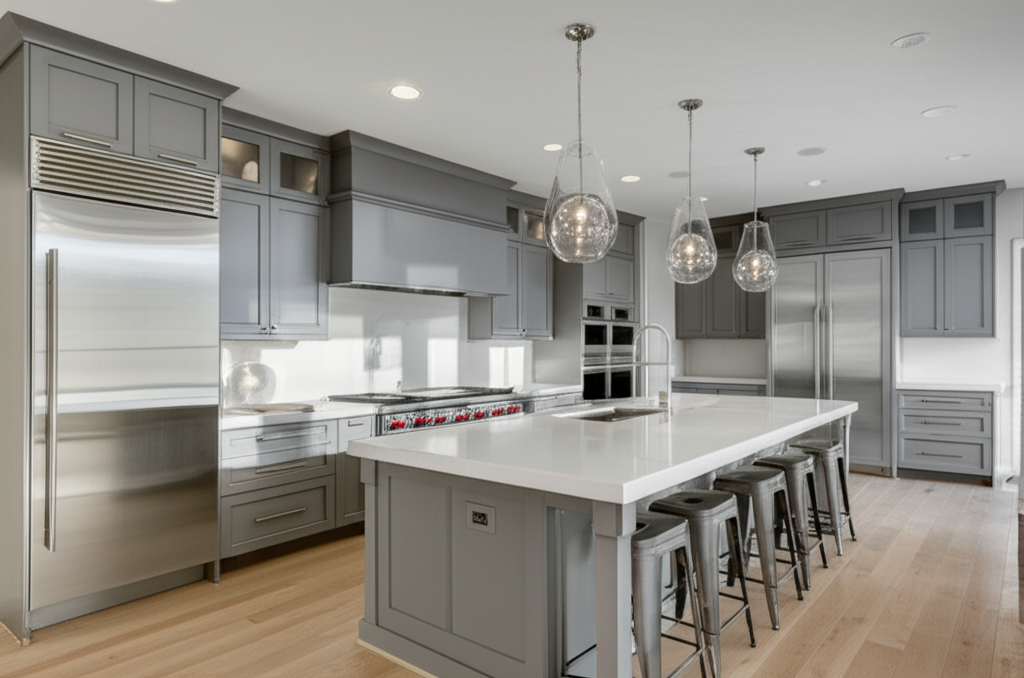
Commercial-grade and commercial-style appliances bring restaurant performance to home kitchens. But professional equipment comes with considerations that standard residential appliances don't. Here's what to understand before buying—and how to maintain these powerful machines.
Commercial-Grade vs. Commercial-Style
### True Commercial Equipment
Designed for: Restaurant use with 12+ hours daily operation **Features**: Maximum power, minimal features, built for serviceability **Examples**: True commercial refrigerators, commercial ranges
Challenges for home use: - May not meet residential codes - Extremely high power requirements - Often loud - Basic aesthetics - May lack safety features expected in homes
### Commercial-Style (Residential Professional)
Designed for: Home use with commercial-level performance **Features**: Professional power with residential aesthetics and safety features **Examples**: Sub-Zero, Wolf, Viking professional series
Benefits: - Meet residential codes - Include required safety features - Better finished appearance - Quieter operation than true commercial - Appropriate electrical/gas requirements
Most homeowners are actually looking at commercial-style appliances rather than true commercial equipment.
Power and Performance Considerations
### Higher BTU Output
Professional-style ranges produce significantly more heat than standard residential ranges.
Standard residential: 10,000-15,000 BTU burners **Professional-style**: 15,000-25,000+ BTU burners
Implications: - Better searing and wok cooking - Faster boiling - More heat in the kitchen - Higher ventilation requirements
### Ventilation Requirements
Commercial-style cooking requires serious ventilation.
Minimum recommendation: Capture 100 CFM per 1,000 BTU of cooktop output **Example**: 6-burner range with 120,000 BTU total = 1,200+ CFM exhaust
Makeup air: High-CFM exhaust creates negative pressure. Homes may need makeup air systems to replace exhausted air.
Installation: Professional ventilation installation is essential. DIY or inadequate ventilation creates moisture, grease, and air quality problems.
### Electrical Requirements
Electric ovens in professional-style ranges often require dedicated circuits:
Standard residential range: 40-50 amp circuit **Professional ranges**: May require 50-60 amp circuits **Dual-fuel with features**: Multiple circuits may be needed
Have an electrician verify your electrical panel capacity before purchase.
### Gas Requirements
High-BTU gas ranges need adequate gas supply.
Standard residential: 1/2" gas line **Professional ranges**: May require 3/4" line for full performance
Inadequate gas supply results in reduced burner output. A plumber can assess and upgrade gas lines if needed.
Installation Considerations
### Weight
Professional-style ranges can weigh 400-600+ pounds—far more than standard residential ranges.
Implications: - Floor support must be adequate - Installation requires multiple people or equipment - Moving for cleaning is difficult
### Clearances
More space needed: Professional equipment generates more heat and often requires larger clearances to combustibles.
Behind: Verify wall materials can handle heat exposure **Sides**: Some require more clearance than standard ranges **Above**: Hood height affects capture efficiency
### Flooring
The weight and heat of professional ranges can affect flooring.
Considerations: - Reinforce floor if needed - Heat-resistant flooring material - Anti-fatigue mats rated for high temperatures
Maintenance Differences
### More Frequent Cleaning
Higher heat means more rapid buildup of carbonized food and grease.
Recommendation: Clean professional ranges after heavy use, not just weekly
### Calibration Needs
Professional ovens with precise temperature controls may need periodic calibration—more often than residential models due to more demanding use.
### Component Wear
High-output burners and heavy use mean some components wear faster:
Igniters: May need replacement more frequently **Grates**: Heavy cast iron or steel needs care to prevent rust **Oven seals**: High-temperature cycling accelerates wear
### Professional Service Requirements
Professional-style appliances often benefit from specialized service technicians who understand:
- Higher output systems
- Professional-grade components
- Brand-specific quirks
- Complex control systems
Is Commercial-Style Right for You?
### Good Fit If:
- You cook frequently and ambitiously
- You want maximum performance for techniques like searing, wok cooking, or high-temperature roasting
- You can accommodate ventilation and utility requirements
- You're prepared for more intensive maintenance
- You have budget for quality equipment and installation
### May Not Be Right If:
- You cook occasionally or simply
- Your kitchen can't accommodate ventilation requirements
- Utility upgrades are impractical
- You prefer low-maintenance appliances
- Budget is a primary concern
Making It Work
### Before Purchase
- Verify utility capacity (gas, electrical)
- Plan ventilation system
- Confirm floor can handle weight
- Understand clearance requirements
- Budget for professional installation
### After Installation
- Learn the equipment thoroughly
- Establish cleaning routines
- Find a qualified service provider
- Keep maintenance records
- Address issues promptly
### Long-Term Value
Well-maintained commercial-style appliances can last 20-30 years. While initial costs are higher, per-year cost of ownership can be lower than replacing standard appliances multiple times.
The combination of professional performance and longevity makes commercial-style appliances a worthwhile investment for serious home cooks.
Need Professional Appliance Repair?
Our experienced technicians are ready to help with your Sub-Zero, Wolf, and other luxury appliance needs.
Related Articles
Sub-Zero Refrigerator Not Cooling? Complete Diagnosis Guide
Your Sub-Zero stopped cooling? Before calling for service, learn what might be causing the problem and what you can check yourself.
Wolf Range Igniter Keeps Clicking But Won't Light: Causes and Solutions
That constant clicking sound from your Wolf range is frustrating. Learn why it happens and when you can fix it yourself versus calling a technician.